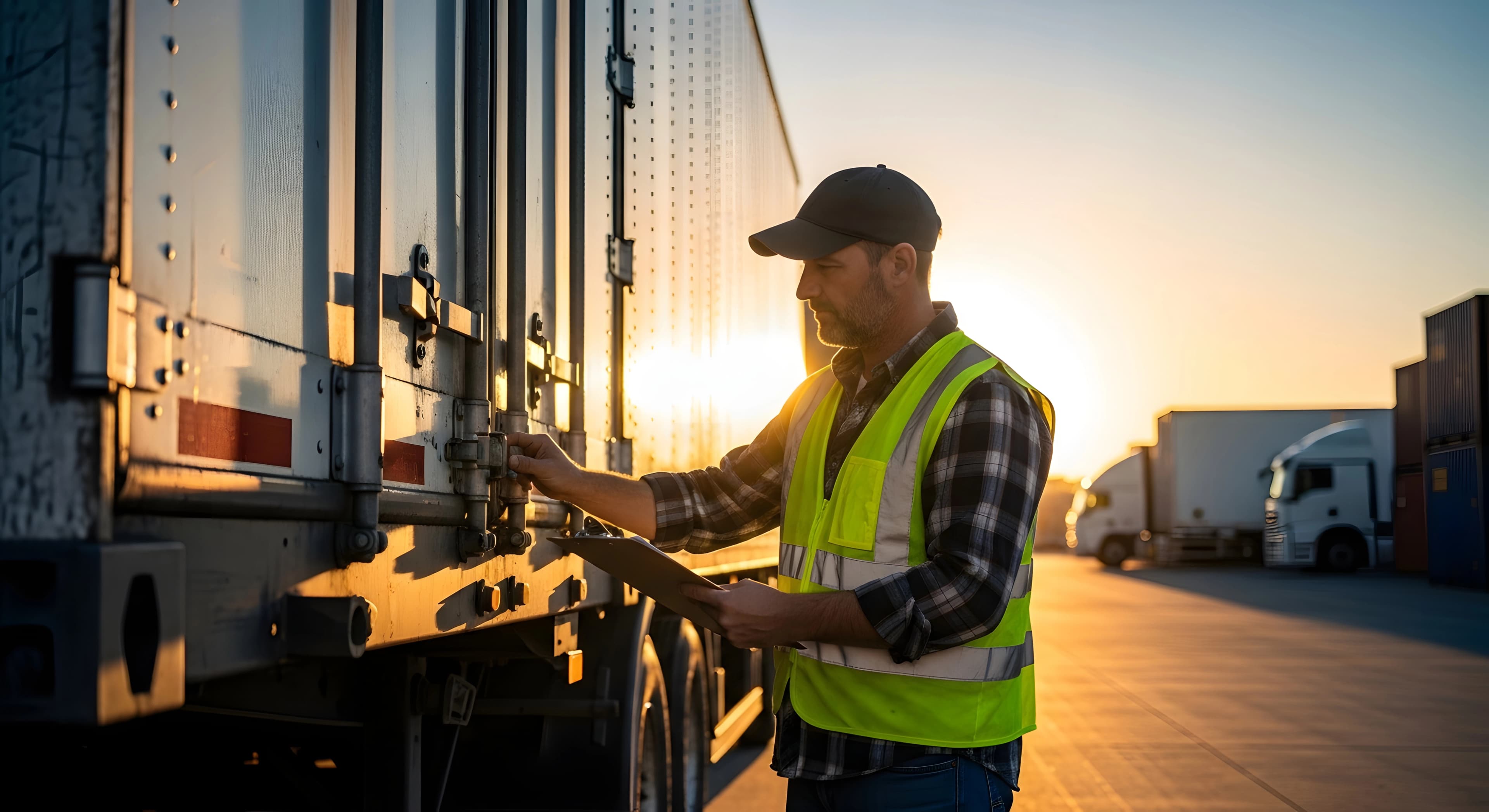
Behind-the-Wheel & ELDT Training
Finish Entry-Level Driver Training with an FMCSA-registered provider if you're a first-time Class A/B applicant.
Find an ELDT providerEverything you need to get your Florida commercial learner's permit — the steps, the DOT medical exam, training requirements, and realistic practice tests aligned with the Florida CDL manual.
In Florida, commercial learner's permits and CDLs are issued by the Florida Department of Highway Safety and Motor Vehicles. Use the facts and steps below for ages, hold times, and what to do next.
Step-by-step process
Hold a valid base license and meet Florida age rules — 18 in-state, 21 for interstate or hazmat.
Get a DOT physical from a certified examiner and get your medical certificate on file with the Florida Department of Highway Safety and Motor Vehicles.
Read the official Florida CDL manual and practice until you're ready for the written exams.
Pass the required knowledge tests (80% to pass) at the Florida Department of Highway Safety and Motor Vehicles and get your CLP.
Practice with a qualified CDL holder for 14 days before you can take the skills test.
Finish Entry-Level Driver Training with an FMCSA-registered provider if you're a first-time Class A/B applicant.
Pass the pre-trip, basic controls, and road test to upgrade your CLP to a full CDL.
The class you need depends on the vehicle you plan to drive in Florida. Pick your class to see the tests and study material that apply to you.
Tractor-trailers, 18-wheelers, and large combination vehicles with a GCWR over 26,001 pounds.
Straight trucks, dump trucks, box trucks, and large buses over 26,001 pounds GVWR.
Passenger vehicles and hazmat loads that do not fit Class A or B but still require a CDL.
Before the Florida Department of Highway Safety and Motor Vehicles issues your CDL, you must pass a DOT physical — a medical exam performed by a certified examiner that confirms you're fit to operate a commercial vehicle.
The examiner checks your vision, hearing, blood pressure, and general health, then issues a Medical Examiner's Certificate (often called a "DOT medical card"). You file this with the Florida Department of Highway Safety and Motor Vehicles, and it must be renewed periodically to keep your CDL valid.
Two federal requirements you'll handle outside the Florida Department of Highway Safety and Motor Vehicles testing office.
Finish Entry-Level Driver Training with an FMCSA-registered provider if you're a first-time Class A/B applicant.
Find an ELDT providerYour DOT physical must be done by an FMCSA-certified examiner. Use the National Registry to find one near you.
Find a certified medical examinerA simple order to study in so you're ready for every test section on your permit exam.
Every Florida CDL applicant takes this test. Study it first, then take full-length practice tests until you consistently score above 80%.
Practice core testsStudy Air Brakes if your vehicle has them, and Combination Vehicles if you're going for a Class A. Focus on one section at a time.
See class testsIf your job needs hazmat, tanker, passenger, school bus, or doubles/triples, study those sections once your core tests feel solid.
Browse endorsementsRetake practice tests, review every explanation for questions you miss, and only schedule your exam once you pass consistently.
Try a sample quizStudy smarter, practice faster, and walk into your CDL exam prepared.
Practice with exam-style questions covering CDL rules, safety, inspections, endorsements, and real test topics.
Study material tailored to your state's CDL manual so you focus on the rules that matter for your test.
Build confidence with practice tests, randomized questions, progress tracking, and detailed answer explanations.
What is the most important reason for doing a vehicle inspection?
Common questions from CDL applicants in Florida.
Yes. Complete ELDT from an FMCSA-registered provider before skills testing if you are getting a Class A or B CDL for the first time, upgrading from Class B to Class A, or adding a school bus, passenger, or hazmat endorsement for the first time.
Yes. Self-certify in one of four categories. Non-excepted interstate or intrastate drivers must keep a current medical examiner's certificate on file. You cannot claim an exemption just because you are not currently driving commercially. Since June 23, 2025, examiners submit results electronically.
Plan to bring your Florida operator's license and proof of Florida residency — for example a Class E license or ID held more than six consecutive months, or a qualifying lease, mortgage, deed, voter registration card, domicile statement, or homestead exemption filing. Pass vision requirements and complete medical self-certification.
Yes. You must be at least 21. First-time hazmat applicants need hazmat ELDT before the knowledge test, then a TSA Security Threat Assessment. Florida residents typically begin the TSA hazmat application in person through the Florida Department of Highway Safety and Motor Vehicles — start about 60 days before you need the endorsement.
Knowledge tests are offered in multiple languages and may be taken orally in English or Spanish, except the hazardous materials test. Skills tests must be conducted in English, and interpreters may not be used during any test.
Eligible active-duty or recently separated (within one year) military applicants may waive the skills test if they have at least two years of experience operating comparable military vehicles. You must still pass the knowledge tests and present the Certification for Waiver of Skill Test for Military Personnel form completed by your commanding officer.
Yes. Florida reciprocates out-of-state CDLs, but hazmat endorsements must be reapplied for in Florida, including a background check, tests, and fees.
Yes. The school bus (S) endorsement requires the passenger (P) endorsement as well. You must pass the required written and skills tests for passenger and school bus operation.
Yes. PrepCDL includes state-specific study guides and practice questions aligned with the Florida CDL manual, plus prep for every class and endorsement.